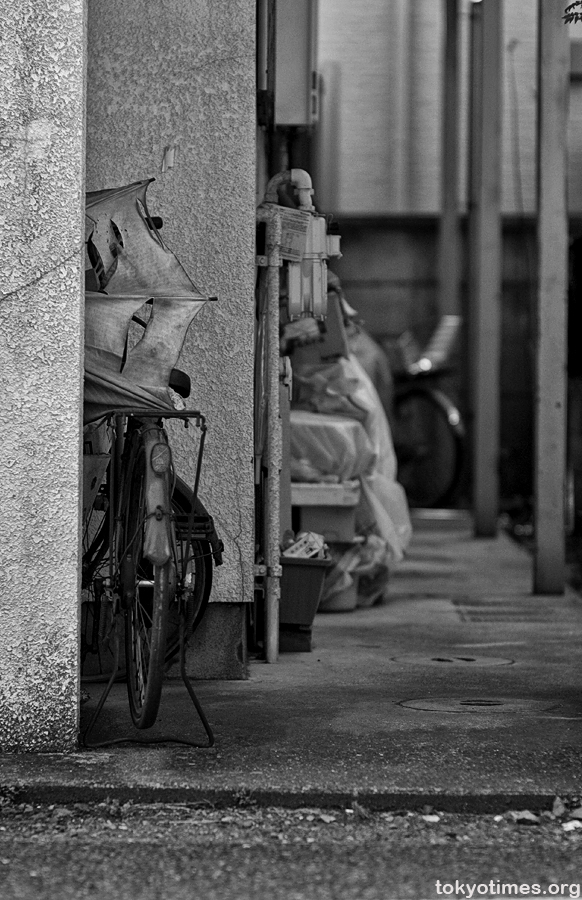
Rather forlornly left at the side of the road, this scooter could be either a not so carefully bound gift, or simply some carelessly abandoned garbage.
Photographs from a small group of islands
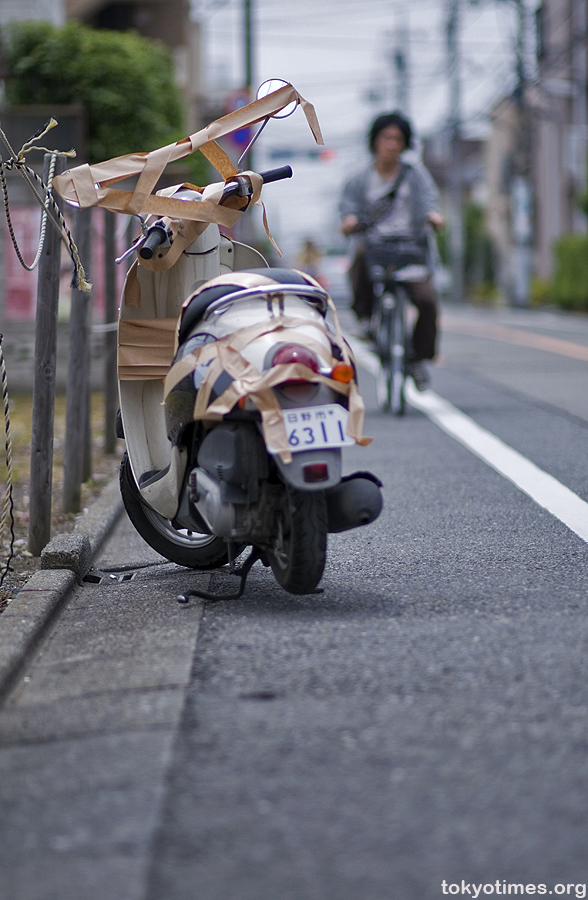
Rather forlornly left at the side of the road, this scooter could be either a not so carefully bound gift, or simply some carelessly abandoned garbage.
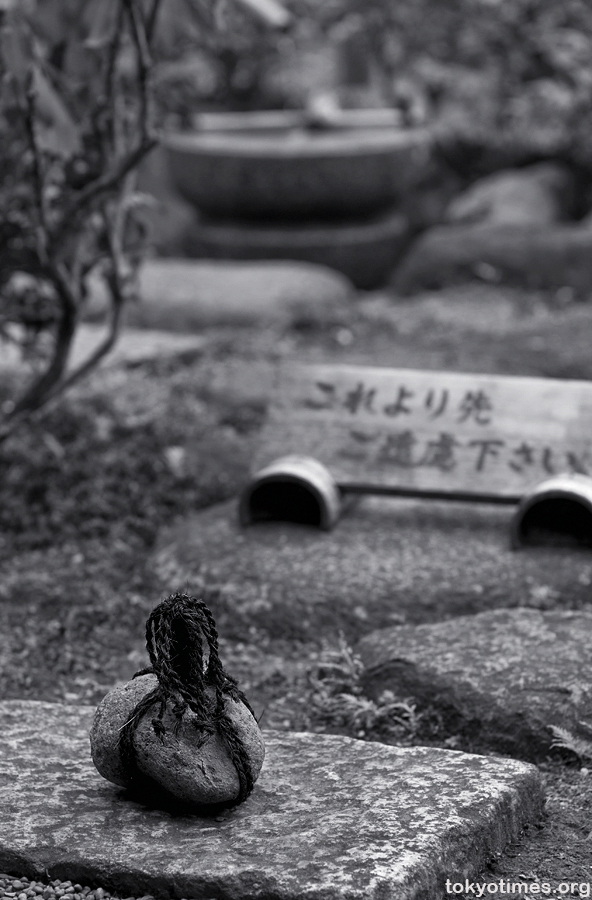
For me at least, the more moss and stone a garden contains, the more fascinating it becomes, and even better if it boasts a tome ishi (æ¢çŸ³) or two; a stone with rope wrapped round it that, whilst perfectly fitting its surroundings, is also functional, meaning ‘stop’ or ‘no entry’.

The only trouble is that as it’s not a universally known symbol — and even when taking the picture above several passing couples voiced aloud their wonder about what it was — such stones are often saddled with a sign, detracting somewhat from their simpleness.
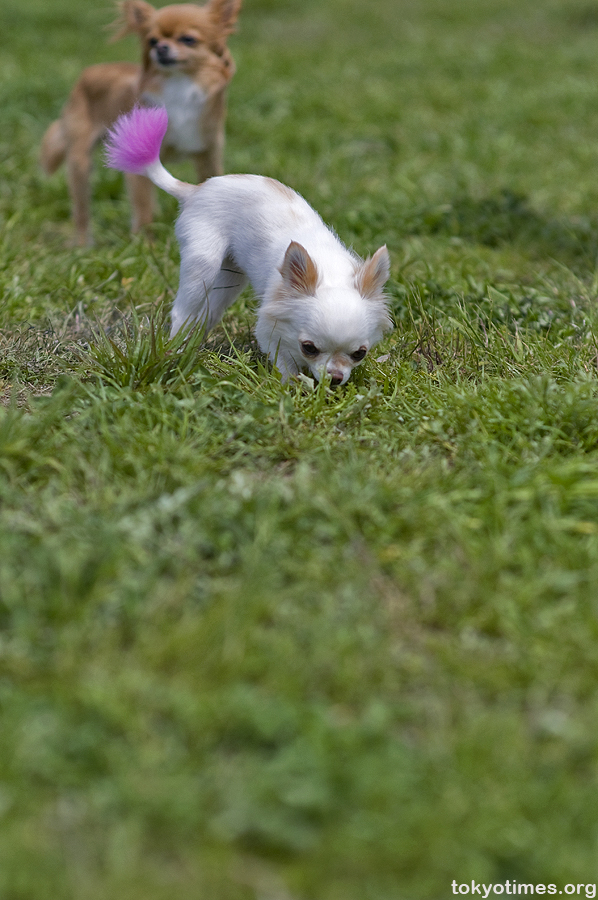
Japan’s fondness for dainty and diminutive dogs shows no sign of fading, with miniature mutts milling about all over the metropolis. But having a canine that is considered cute is apparently not good enough anymore, with clothes and carrying contraptions deemed de rigueur — the former, in particular, now so normal that it’s increasingly unusual to see a not so big dog naked.
And then even when one does, it seems natural colourings clearly aren’t cute enough.
Sun. Silence. And serenity.
When it comes to hunting down haikyo/abandoned buildings, books and the web offer a wealth of information and photos, but the trouble is, the latter means that the surprise isn’t quite the same, as you’ve already seen at least some of the structure before even setting foot inside it. So, with this in mind, coming across a place that hasn’t been pictured before is a real treat, and definitely a real rush, as what lies behind every door is a new discovery.
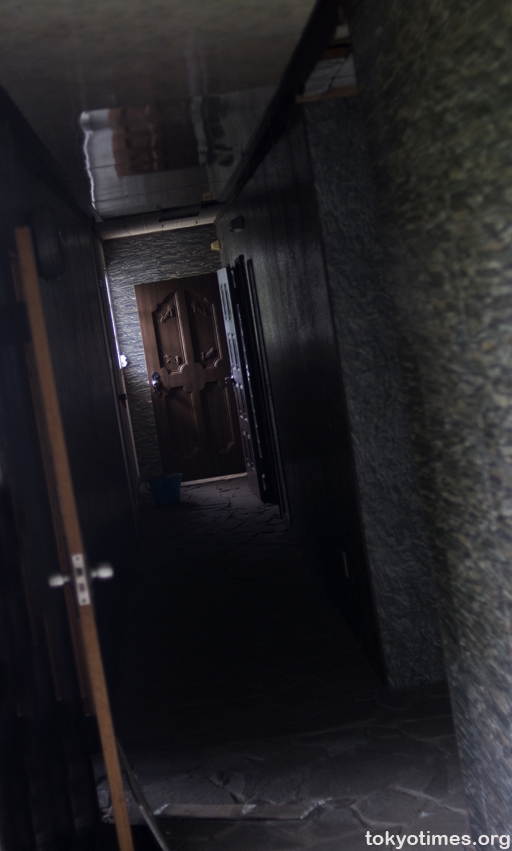
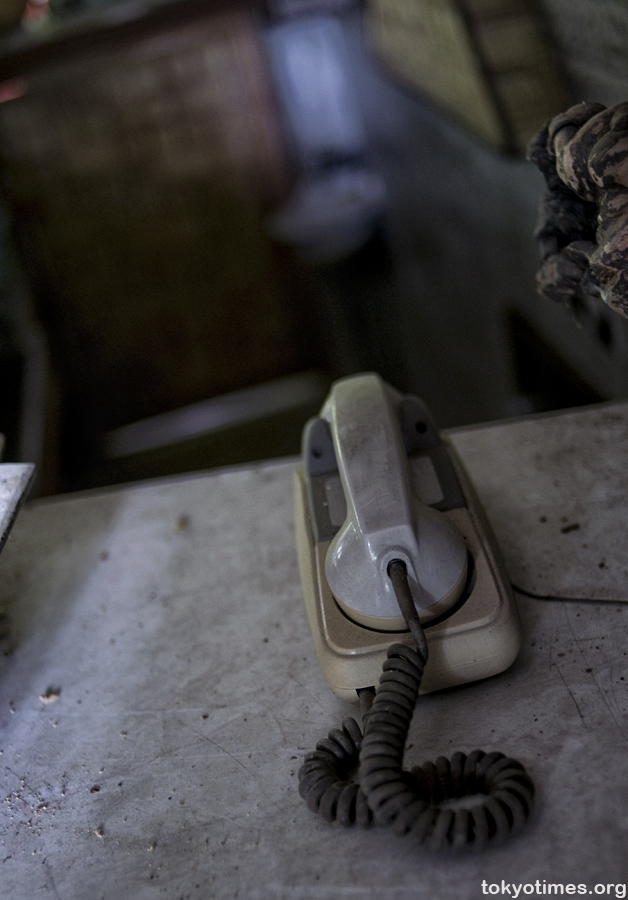
A situation that fortunately arose recently when a friend and I were in search of a no longer in use love hotel, and instead stumbled upon an abandoned and luckily unlocked ‘Scandinavian’ lodge. A relatively small place that didn’t contain a great deal content wise, but it did boast that firm favourite of all haikyo, a phone.
Along with statues of what are presumably Scandinavian beauties.

With silent stares that were really quite unsettling.

Especially so when coupled with a less fetching figure.

A photo of which turned out to be my final one, as, totally unannounced, and utterly unheard, an irate local came barging through the doors behind me, and in no uncertain terms said I should leave — a man who sadly couldn’t be appeased no matter how much I apologised.
Meaning no more time to take pictures, and definitely no time for a cheeky cup of tea and a couple of buns.

Japan’s prolonged economic stagnation and a rapidly changing job market have not only consigned the myth of all Japanese being middle class to the rubbish bin, but, for a nation well known for its habit of hoarding, even saving a little something for a rainy day is now more or less unmanageable for many.